Padina Pavonica Extract (EPP)

Botany

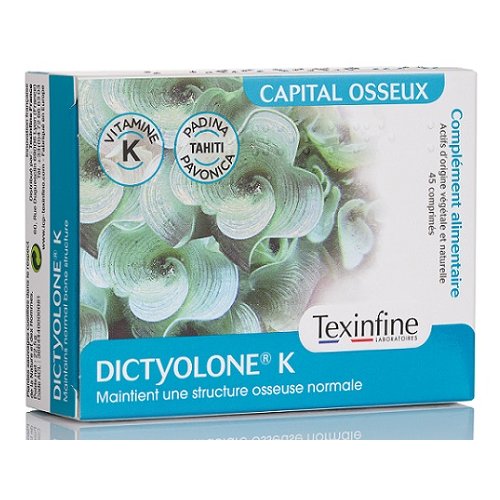
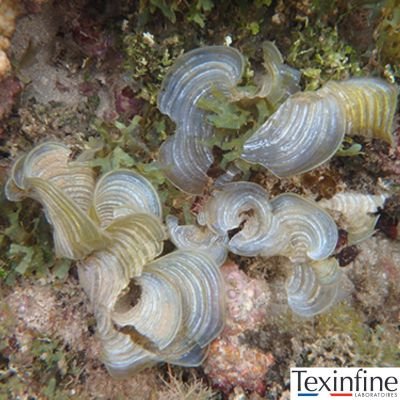
Padina pavonica algaPadina pavonica is a brown alga of the family of Pheophycaea. It grows abundantly in the Mediterranean. This alga is abundant from June to September, on the coast from the surface down to 60m below sea level. The appearance of Padina in its natural habitat is quite particular. It owes its whiteness to a deposit of calcium carbonate. Curiously, one notices that calcium carbonate is deposited on the outside of the plant in the form of aragonite crystals. Aragonite cannot be formed spontaneously in the water of the Mediterranean.

Usually aragonite crystals are formed under the influence of biological agents, under considerable and very precise conditions of temperature and pressure. Aragonite crystallises are found on the outside of the plant and on the leaves. G. Gutierrez believed that the plant synthesised and emitted a substance, which could have an effect on the fixation of calcium.

In fact, if the calcium carbonate were deposited in an undirected manner, as, for example, during cellular respiration with rejection of CO2, the carbonate would appear in an amorphic form or that of calcite crystals.

A technique for the extraction of the active principal was developed to produce the extract of Padina pavonica: EPP. Underwater farms and a unit of industrial extraction had to be set up for this production. The setting up of this in Malta was dictated by reasons related to the culture of the plant itself that grows nearly all the year round in the South Mediterranean. On the Northern Coast, Padina is only present a few months a year.

sub gathering padina algaepadina pavonica

Cell Biology Studies on the Extract of Padina pavonica

Cell culture studies compared the activity of EPP with known calciotropic molecules. Oestradiol, calcitonine, vitamin D3, and biphosphonates act on the fixation of calcium within the extracellular matrix of osteoblasts. These molecules do not demonstrate any activity if the cells are cultivated in the presence of calcium channels inhibitors or interleukine 1 (IL-1).

The active molecules of the extract of Padina pavonica (AMPP) amplify the fixation of calcium by osteoblasts even when cultivated in the presence of calcium channel inhibitor or IL-1. Unlike other substances AMPP acts on cells in an inflammatory state and in the presence of inhibitors of calcium metabolism. Research has shown that one of the points of impact of AMPP is the protection and the restoration of the cell's phenotype. The protection of cells, regarding agents such as Interleukine 1, is essentially due to an increased synthesis of proeoglycanes, especially glycosaminoglycanes such as chondroitine sulphate and hyaluronic acid. The results of tissue culture studies show that the active molecules in the extract of Padina pavonica are independent of the movement of calcium in bone cells. The pathways involved in the metabolism of calcium fixation are stimulated by the active molecules of Padina pavonica independently of the calcium channels.

Calcium fixed by osteoblasts AMPP and Calcium inhibitorsCalcium fixed in the presence of Interleukine 1

         Calcium fixed by osteoblasts AMPP and Calcium inhibitors                     Calcium fixed in the presence of Interleukine 1


© 2008 - Institute of Cellular Pharmacology - Mosta Technopark, Mosta MST 3000 - Malta
Tel: (+356) 21 438458 Fax: (+356) 21 419778 -  Sitemap

Created and maintained by WSI